Digital Catalogue vs Printed Catalogue: Which Is Better for Your Business?
Introduction
Catalogues have always been useful for businesses that sell multiple products.
Traditionally, businesses relied on printed catalogues, brochures, and product sheets to show customers what they offered. Today, digital catalogues provide another way to showcase products and share them instantly.
For a small business, the choice isn't necessarily about completely replacing one with the other. It is about understanding when each format works best.
A printed catalogue can be useful during face-to-face interactions, while a digital catalogue can make it easier to share products through WhatsApp, social media, websites, and QR codes.
So, which one should your business use?
Let's compare both.
What Is a Digital Catalogue?
A digital catalogue is an online version of your product or service catalogue that customers can access through a link or digital device.
Depending on the platform, it can include:
- Product images
- Product names
- Descriptions
- Prices
- Categories
- Contact options
- Enquiry buttons
- Links to other business information
Instead of carrying a physical booklet, you can share the catalogue digitally with customers.
What Is a Printed Catalogue?
A printed catalogue is a physical document containing information about your products or services.
It may include:
- Product photographs
- Product names
- Descriptions
- Prices
- Specifications
- Business contact details
Printed catalogues can be particularly useful when customers are interacting with your business in person.
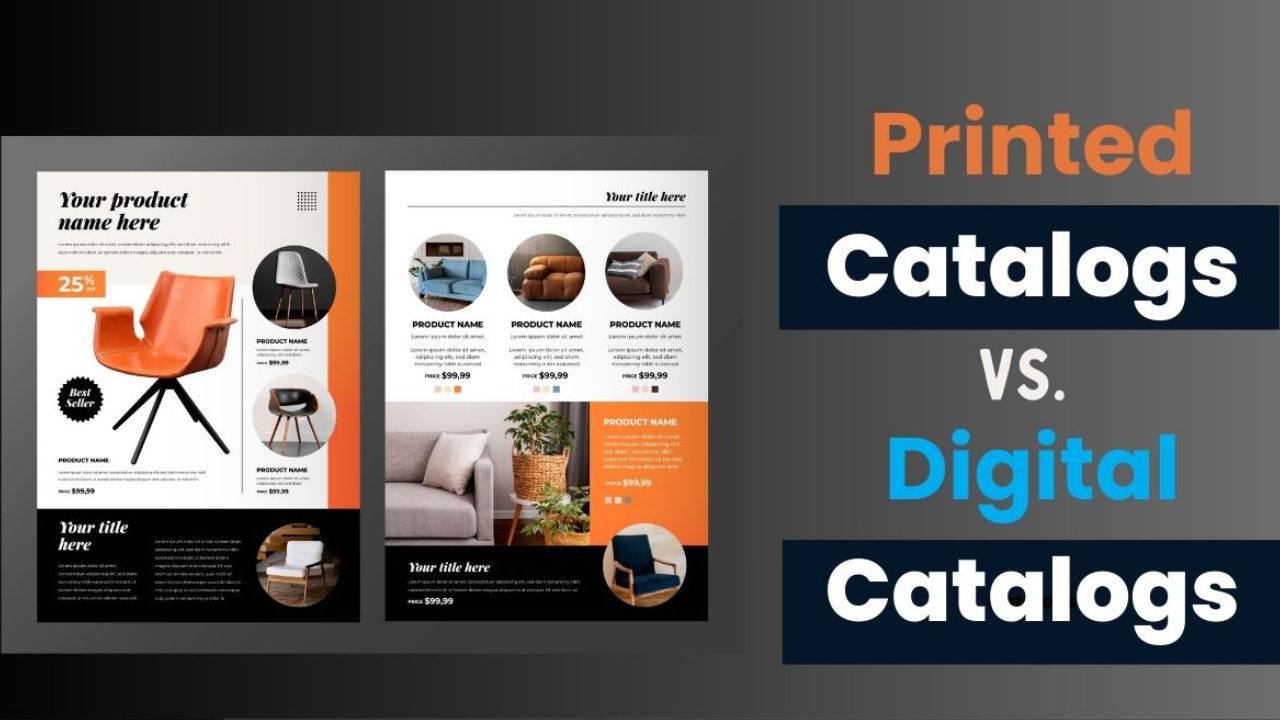
Digital Catalogue vs Printed Catalogue
Feature Digital Catalogue Printed Catalogue Sharing | Instant online sharing | Physical distribution
Updating | Usually easier | Requires reprinting
Physical presence | No | Yes
WhatsApp sharing | Easy | Not directly
QR code integration | Easy | Can be used to direct customers to it
Large product range | Convenient | Can become bulky
Printing cost | Not required for the digital version | Required
Internet/device | Usually required | Not required
Customer browsing | Phone or computer | Physical copy
Updating | Usually easier | Requires reprinting
Physical presence | No | Yes
WhatsApp sharing | Easy | Not directly
QR code integration | Easy | Can be used to direct customers to it
Large product range | Convenient | Can become bulky
Printing cost | Not required for the digital version | Required
Internet/device | Usually required | Not required
Customer browsing | Phone or computer | Physical copy
The better option depends on how your customers discover and purchase your products.
1. Cost of Creating and Updating
One of the biggest advantages of digital catalogues is that they can be easier to update.
Imagine you have printed 1,000 catalogues and then:
- A product goes out of stock.
- Prices change.
- A new product launches.
- Packaging changes.
- Your phone number changes.
A printed catalogue cannot simply be edited.
A digital catalogue can generally be updated without printing a new batch.
This can make digital catalogues particularly useful for businesses whose products or prices change frequently.
2. Sharing With Customers
A printed catalogue needs to physically reach the customer.
A digital catalogue can be shared through:
- Website
- QR codes
- SMS
For businesses that regularly receive enquiries online, this can make product discovery much easier.
Instead of sending dozens of product photographs individually, you can send one catalogue link.
3. Product Range
Printed catalogues can become inconvenient when you have a large number of products.
A 10-page catalogue may be manageable.
A 100-page catalogue becomes much harder to carry, distribute, update, and replace.
Digital catalogues can make larger product collections easier to organize because customers can browse categories without carrying a physical document.
4. Customer Experience
Both formats can offer a good customer experience when designed properly.
A printed catalogue can feel useful during an in-person sales conversation.
A digital catalogue can be more convenient when the customer is shopping remotely.
For example, a customer can receive a product catalogue on WhatsApp, browse it at their own pace, and then contact the seller about a specific product.
5. Speed of Updates
Businesses often change their product information.
A seller may introduce new designs every month.
A service provider may add new packages.
A retailer may change prices regularly.
With printed catalogues, every significant change can create additional printing work.
With a digital catalogue, updates can generally be made much faster.
6. Offline Use
This is one area where printed catalogues still have an advantage.
If you're meeting customers somewhere without reliable internet access, a physical catalogue doesn't depend on a phone, battery, or internet connection.
For businesses that frequently attend physical exhibitions, markets, trade events, or customer meetings, printed material can still be useful.
7. Connecting Customers to the Next Step
A printed catalogue can tell customers what you sell, but the next step usually requires another action.
A digital catalogue can potentially connect directly to the next step.
For example:
Product → View Details → Enquire → WhatsApp
or:
Product → View Details → Visit Website → Purchase
This makes digital catalogues particularly useful for businesses that receive online enquiries.
8. Use QR Codes With Printed Catalogues
You don't necessarily have to choose only one.
A printed catalogue can include a QR code that takes customers to your digital catalogue.
This creates a useful combination:
Printed material for offline interaction + Digital catalogue for online browsing
For example, a customer at your shop can scan a QR code and open the latest product collection on their phone.
This also means you can update the digital catalogue without having to redesign the entire printed catalogue every time.
9. Which Is Better for Small Product Sellers?
For small product sellers, a digital catalogue can be particularly useful when products are regularly shared through WhatsApp or social media.
Instead of sending:
"Product 1.jpg"
"Product 2.jpg"
"Product 3.jpg"
"Product 4.jpg"
you can provide one place where customers can browse.
This can save time for both the customer and the seller.
10. Which Is Better for Service Providers?
Service providers can also use catalogues, even if they don't sell physical products.
For example, a salon could display:
- Hair services
- Beauty services
- Packages
- Pricing
A consultant could showcase:
- Services
- Packages
- Areas of expertise
A photographer could display:
- Photography packages
- Portfolio examples
- Services
- Contact information
A digital catalogue can work as a structured presentation of what the business offers.
11. When a Printed Catalogue Makes More Sense
A printed catalogue can still be useful when:
- Customers prefer physical material.
- You regularly meet customers in person.
- Your product range changes infrequently.
- You attend trade shows or exhibitions.
- Internet access isn't always available.
- Your sales process is primarily offline.
In these situations, printed material can remain valuable.
12. When a Digital Catalogue Makes More Sense
A digital catalogue is especially useful when:
- Customers frequently contact you online.
- Products change regularly.
- You sell through WhatsApp.
- You use social media to attract customers.
- You want customers to browse remotely.
- You have many products.
- You want to update information without reprinting.
For digitally active businesses, it can become an important part of the sales process.
Should You Choose One or Use Both?
For many businesses, the best answer is both.
Use a printed catalogue where physical interaction matters.
Use a digital catalogue where online sharing matters.
For example:
At your shop: Printed catalogue + QR code
On WhatsApp: Digital catalogue
On Instagram: Digital catalogue link
At an exhibition: Printed catalogue
On your website: Digital catalogue or online shop
This gives customers multiple ways to explore your products.
Common Catalogue Mistakes
Regardless of the format, avoid:
- Low-quality product images
- Outdated prices
- Missing product information
- Too much text
- Difficult-to-read layouts
- Incorrect contact details
- Products that are no longer available
- No clear next step for customers
A catalogue should make buying decisions easier, not create more questions.
Frequently Asked Questions
Is a digital catalogue better than a printed catalogue?
Not universally. Digital catalogues are easier to share and update, while printed catalogues can be useful for offline interactions.
Can I use a digital catalogue on WhatsApp?
Yes. A digital catalogue can be shared through WhatsApp as a link, making it easier for customers to browse before starting a conversation.
Do small businesses need a product catalogue?
If customers regularly ask what products or services you offer, a catalogue can make the information easier to organize and share.
Can a printed catalogue include a digital catalogue link?
Yes. A QR code can be printed on the catalogue and used to direct customers to your latest digital catalogue.
Conclusion
Printed catalogues aren't outdated, and digital catalogues aren't automatically better.
They solve slightly different problems.
Printed catalogues work well when your business depends heavily on physical interaction. Digital catalogues are particularly useful when customers discover and communicate with your business online.
For many small businesses, combining both can provide the best experience.
The important thing is to keep your catalogue accurate, easy to browse, visually clear, and connected to a simple way for customers to contact or buy from you.
Why Businesses Choose Futkar
Futkar helps small businesses create a stronger digital presence with Pocket Websites, Online Shops, Product Catalogues, Digital Business Cards, and Smart QR Codes. A digital catalogue can give customers one simple place to explore products or services and then connect with the business when they're ready to enquire or buy.
Ready to grow your business online?
Create your Pocket Website & Digital VCard free with Futkar.
Start Free Today